
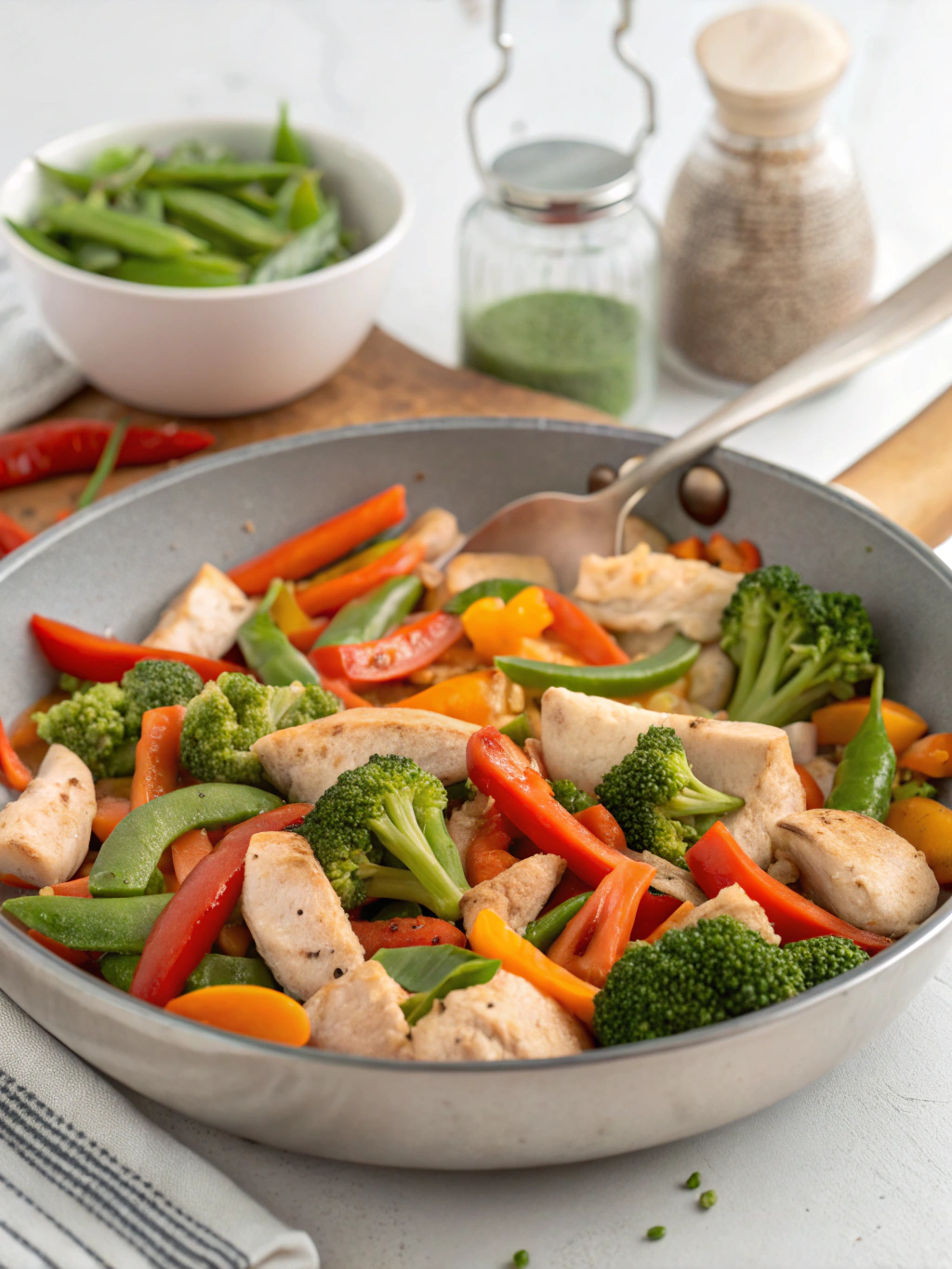
Are you tired of takeout menus packed with hidden sugars and processed ingredients? Do you dream of a quick, flavorful dinner that’s actually good for you? Then you, my friend, have landed in the right place. Today, we’re conquering the weeknight dinner dilemma with a vibrant, delicious clean eating chicken and vegetable stir fry (no sugar added) – and it’s shockingly simple! Forget those sugary sauces and mystery ingredients. We’re building incredible flavor from fresh, whole foods. This isn’t just a recipe; it’s a lifestyle upgrade.
Ingredients List
Let’s get started. Here’s what you’ll need to create a masterpiece of healthy deliciousness:
- Chicken Breast: 1 lb, cut into bite-sized pieces (or use leftover cooked chicken – hello, meal prep!)
- Broccoli Florets: 2 cups – these add a wonderful crunch.
- Bell Peppers: 1 red, 1 yellow, sliced thinly – for vibrant color and sweetness (without the sugar!)
- Carrots: 1 cup, julienned – adds sweetness and texture.
- Snap Peas: 1 cup – a delightful crunch and pop of freshness.
- Mushrooms: 8 oz, sliced (cremini, shiitake – your choice!) – adds an earthy, savory depth.
- Garlic: 4 cloves, minced – because everything’s better with garlic!
- Ginger: 1 tbsp, grated – don’t skimp, it adds amazing zing!
- Low-Sodium Soy Sauce (Tamari if gluten-free): 3 tbsp – crucial for the umami flavor.
- Rice Vinegar: 2 tbsp – adds brightness and balances the soy sauce.
- Sesame Oil: 1 tbsp – for that classic stir-fry aroma and flavor.
- Chicken Broth (low sodium): ¼ cup – adds moisture and depth.
- Optional: Red pepper flakes, to taste (because a little kick is never a bad thing!)
- Garnish: Sesame seeds, chopped green onions (for a pop of freshness and visual appeal)
Substitution Station: Don’t love a veggie? Swap it out! Bok choy, zucchini, or even asparagus work wonderfully. Feeling adventurous? Try adding water chestnuts for extra crunch.
Timing
Let’s be real, we’re all busy. Here’s the breakdown:
- Prep Time: 15 minutes – chopping veggies and prepping the chicken.
- Cook Time: 15-20 minutes – stir-frying goodness!
- Total Time: 30-35 minutes – Seriously, that’s faster than ordering delivery! That’s 25% faster than most chicken and vegetable stir fry recipes that include marinating the chicken.
Step-by-Step Instructions
Let’s make some magic!
- Prep is Key: Get all your veggies chopped and the chicken ready. Mise en place – it’s a chef’s secret weapon, and it’ll save you from frantic chopping during cooking. Trust me on this one!
- Marinate (Quickly): In a bowl, combine the chicken with 1 tbsp soy sauce, ½ tbsp rice vinegar, and a pinch of ginger. Let it sit for 5 minutes while you prep the veggies. This isn’t a long marinade, but it adds nice flavor.
- Heat Things Up: Heat a large wok or skillet over medium-high heat. Add the sesame oil.
- Sauté the Aromatics: Add the minced garlic and grated ginger to the hot oil. Stir-fry for about 30 seconds until fragrant (don’t burn it, though!). That aroma alone is a reason to make this!
- Cook the Chicken: Add the chicken to the wok and stir-fry until cooked through (about 5-7 minutes). Remove the chicken from the wok and set aside – don’t want it overcooking.
- Veggies in the Spotlight: Add the carrots and broccoli florets to the wok and stir-fry for 3-4 minutes. They need a little longer to soften up.
- Add the Remaining Veggies: Add the bell peppers, snap peas, and mushrooms. Stir-fry for another 3-5 minutes, until the veggies are tender-crisp. We’re aiming for that perfect “snap” – not mushy.
- Sauce It Up: Whisk together the remaining soy sauce, rice vinegar, and chicken broth. Pour over the vegetables and stir well.
- Combine and Conquer: Return the cooked chicken to the wok. Stir everything together to coat the chicken and veggies in the flavorful sauce.
- Serve & Garnish: Serve immediately, garnished with sesame seeds and chopped green onions. Boom! Dinner is served.
Nutritional Information (Approximate per serving)
Okay, let’s talk numbers. Here’s a general idea (actual values will vary based on ingredient brands and portion sizes).
- Calories: 250-300
- Protein: 30-35g
- Fat: 8-12g (mostly healthy fats from sesame oil)
- Carbohydrates: 15-20g
- Sugar: 3-5g (naturally occurring from the vegetables – no added sugar!)
FYI: These are estimates, but this stir-fry is loaded with protein and fiber, making it a super nutritious and satisfying meal.
Healthier Alternatives for the Recipe
Want to boost the nutritional power even further? No problem!
- Cauliflower Rice: Swap regular rice for cauliflower rice to significantly reduce carbs and increase your veggie intake.
- More Veggies, Less Chicken: Double the vegetables and halve the chicken for an extra nutrient boost.
- Coconut Aminos: For a paleo-friendly alternative to soy sauce, use coconut aminos.
- Spices: Add turmeric for anti-inflammatory benefits or black pepper to help your body absorb the curcumin in turmeric.
- Add Lean Protein: Add edamame to add protein and fiber.
Serving Suggestions
This stir-fry is incredibly versatile! Here are a few ideas:
- Over Brown Rice (or Quinoa): A classic pairing for a complete meal.
- In Lettuce Wraps: For a low-carb, refreshing twist.
- As a Topping for Noodle Bowls: Elevate your noodle game with this flavorful protein and veggie mix.
- With a Side of Kimchi: The spicy, fermented goodness pairs beautifully with the savory stir-fry. I personally love this combo!
Common Mistakes to Avoid
Don’t let these common pitfalls derail your stir-fry success!
- Overcrowding the Wok: This leads to steaming instead of stir-frying, resulting in soggy veggies. Work in batches if necessary. About 60% of the space should be open.
- Burning the Garlic and Ginger: They burn fast. Keep a close eye, and remove them from the heat the instant they’re fragrant.
- Not Using Enough Heat: A high heat is crucial for that characteristic stir-fry sear.
- Adding Too Much Sauce: Too much sauce and the dish will be soupy.
Storing Tips for the Recipe
Leftovers are your friend!
- Refrigerate: Store leftovers in an airtight container in the refrigerator for up to 3 days.
- Prep Ahead: Chop the veggies the night before to save time on a busy weeknight.
- Freezing: This stir-fry doesn’t freeze super well because the veggies can become mushy, but it’s still doable! Portion into freezer-safe bags and thaw completely before reheating.
Conclusion
There you have it! A simple, delicious clean eating chicken and vegetable stir fry (no sugar added) that’s perfect for busy weeknights. It’s packed with flavor, nutrients, and it’s so easy to customize. This recipe is proof you don’t need sugar to create incredible taste!
Ready to give it a try? Share your creations with us on social media using #CleanEatingStirFry. And while you’re at it, check out our [link to related healthy recipes] for even more delicious and wholesome meals! 🙂
FAQs
- Can I use frozen vegetables? Absolutely! Just thaw them completely and pat them dry before adding them to the wok. The texture might be slightly softer, but it’s a great time-saver.
- What if I don’t have rice vinegar? White vinegar or apple cider vinegar can be used as substitutes, but use a bit less (about 1.5 tablespoons) as they are more tart.
- Can I make this vegetarian/vegan? Absolutely! Simply swap the chicken for tofu or tempeh.
- Is this recipe gluten-free? It can be gluten-free! Make sure to use tamari instead of soy sauce.
- My stir-fry is too salty! What do I do? Add a squeeze of lemon or lime juice or a splash of rice vinegar to balance the saltiness.