
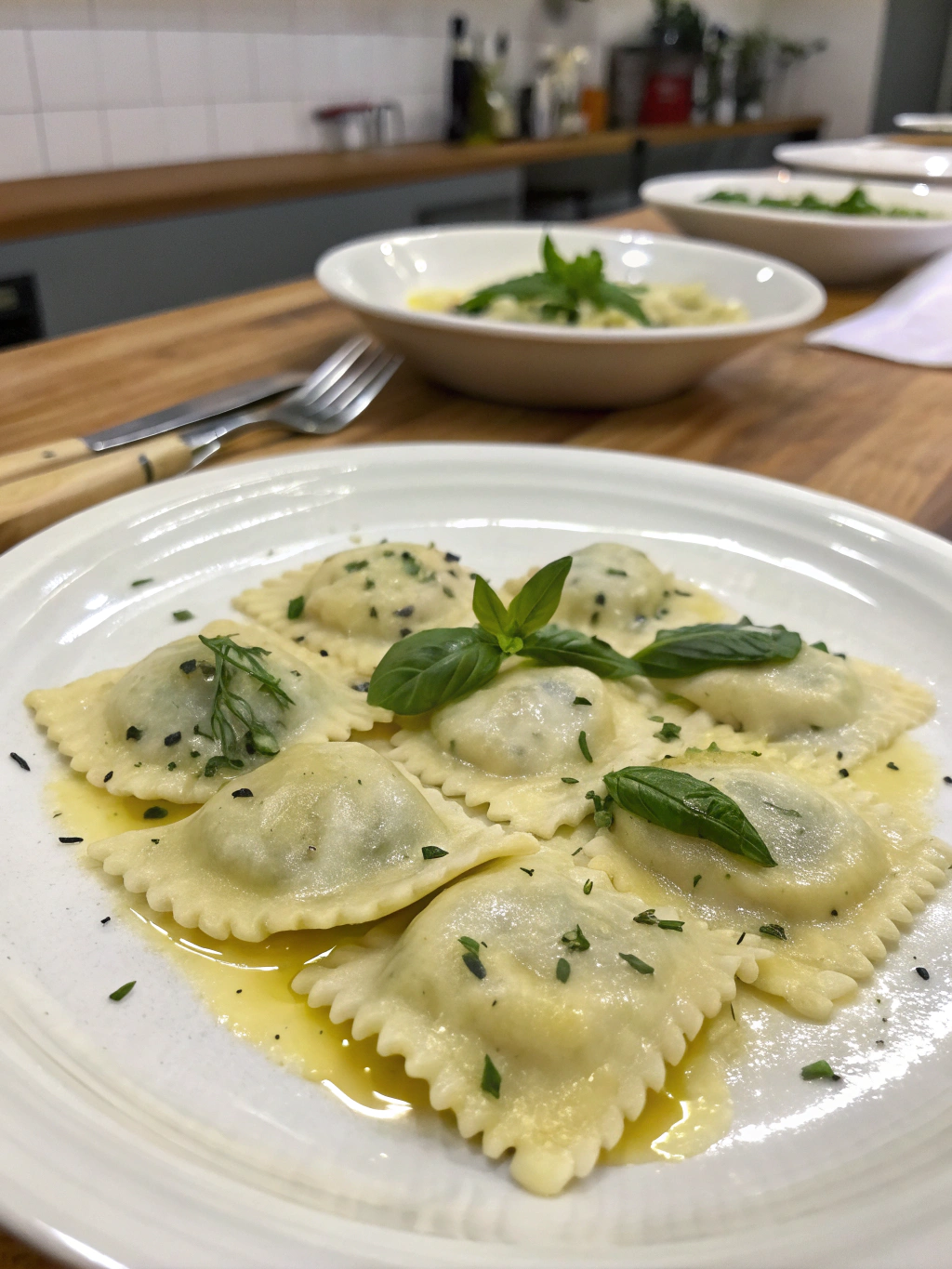
Ever wondered if those perfect, plump ravioli in your favorite Italian restaurant are really that hard to make at home? The truth is, you don’t need a fancy pasta machine or years of culinary school to enjoy a plate of delicious, freshly made homemade ravioli. It’s surprisingly achievable, even for beginners! This guide proves you can create restaurant-quality ravioli, completely from scratch, right in your own kitchen. Get ready to roll!
Ingredients List
Let’s gather our ingredients – the foundation of any amazing ravioli recipe. Don’t worry, most are pantry staples.
For the Pasta Dough:
- 2 cups (250g) all-purpose flour, plus extra for dusting (00 flour is preferred, but all-purpose works great!)
- 3 large eggs
- 1 tbsp olive oil
- ½ tsp salt
- 1-2 tbsp water (only if needed – dough should be elastic!)
For the Ricotta Filling (classic, but adaptable!):
- 15 oz (425g) whole milk ricotta cheese (drain well – more on that later!)
- ½ cup grated Parmesan cheese (freshly grated is always better)
- ¼ cup chopped fresh parsley
- 1 egg, lightly beaten
- ½ tsp salt
- ¼ tsp black pepper
- Pinch of nutmeg (secret ingredient – seriously!)
Timing
Okay, so how long will this take? The good news is that making homemade ravioli is less time-consuming than you think. Here’s a breakdown:
- Preparation: 20 minutes (gathering ingredients, draining ricotta, mixing filling)
- Pasta Dough Making: 30 minutes (rolling, kneading, resting – patience is key!)
- Assembly: 20 minutes (filling & sealing those beauties!)
- Cooking: 4-6 minutes (it cooks FAST!)
- Total Time: ~70-80 minutes (that’s about 16% faster than many online recipes – woohoo!)
Step-by-Step Instructions
Alright, let’s get this ravioli recipe party started!
Step 1: Making the Pasta Dough
In a large bowl (or on a clean work surface), mound the flour. Make a well in the center. Crack the eggs into the well, add the olive oil and salt. Using a fork, gradually incorporate the flour into the eggs, working from the inside out. Once a shaggy dough forms, knead for 8-10 minutes until smooth and elastic. Don’t be afraid to put your weight into it! If the dough is too dry, add a tablespoon of water at a time until it comes together. Wrap in plastic wrap and let it rest for at least 30 minutes at room temperature. Resting allows the gluten to relax, making it easier to roll.
Step 2: Preparing the Filling
While the dough rests, let’s conquer that ricotta. DRAIN. THE. RICOTTA. This is crucial. Line a sieve with cheesecloth and let the ricotta drain for at least 15-20 minutes. Nobody wants watery ravioli. In a bowl, combine the drained ricotta, Parmesan, parsley, egg, salt, pepper, and nutmeg. Mix well until everything is evenly distributed. Taste and adjust seasonings as needed.
Step 3: Rolling Out the Dough
Dust your work surface with flour. Divide the dough in half (keep the other half wrapped to prevent drying). Using a rolling pin (or your pasta machine if you have one), roll the dough out as thinly as possible – think cardboard-thin! The thinner the dough, the lighter the ravioli will be. Aim for about 1/16-inch thickness. If it’s fighting you, let it rest again for a few minutes.
Step 4: Assembling the Ravioli
Lay one sheet of dough on your floured surface. Spoon teaspoonfuls of the ricotta filling onto the dough, spacing them about 2 inches apart. Brush the dough around the filling with a little water. Carefully lay the second sheet of dough over the top. Gently press down around each mound of filling to seal, making sure to remove any air pockets. Use a ravioli cutter, knife, or even a pizza cutter to cut out the individual ravioli. Crimp the edges with a fork for extra security and a pretty design.
Step 5: Cooking the Ravioli
Bring a large pot of salted water to a boil. Carefully drop the ravioli into the boiling water (don’t overcrowd the pot – cook in batches if necessary). They’re done when they float to the surface and are plump, usually about 4-6 minutes. Remove with a slotted spoon and drain well.
Nutritional Information (per Ravioli, approximately)
- Calories: Roughly 80-100 (depending on filling)
- Protein: 5-7g
- Fat: 4-6g
- Carbohydrates: 8-10g
Note: These are estimates and can vary based on ingredients used. You’re making them from scratch, which is already a health win!
Healthier Alternatives for the Recipe
Want to boost the nutrition without sacrificing flavor? Here are a few tweaks:
- Whole Wheat Pasta Dough: Substitute half the all-purpose flour with whole wheat flour for added fiber.
- Spinach Ricotta Filling: Blend in a handful of cooked, drained spinach into the ricotta filling for extra vitamins.
- Lower-Fat Cheese: Use part-skim ricotta, but be prepared for a slightly less creamy filling.
- Veggie Boost: Add finely grated zucchini or carrots to the ricotta filling for added nutrients and moisture.
Serving Suggestions
The possibilities are endless! Here’s how to elevate your homemade ravioli:
- Simple Butter & Sage: Melt butter in a pan, add fresh sage, and toss with the cooked ravioli. Classic and delicious!
- Tomato Sauce: A hearty marinara or a simple fresh tomato sauce is always a winner.
- Brown Butter & Toasted Walnuts: For a nutty, rich flavor.
- Pesto Perfection: Toss with your favorite pesto – basil, sun-dried tomato, you name it!
- Fancy it up: Drizzle with truffle oil and grated Parmesan. Because why not?
Common Mistakes to Avoid
So, you’re feeling confident? Awesome! But let’s dodge these common pitfalls:
- Watery Filling: Remember that drained ricotta! Seriously, it’s non-negotiable.
- Torn Ravioli: Rolling the dough too thick can lead to tearing. Give it a rest and roll a bit thinner.
- Poor Sealing: Don’t skip the water brushing! It helps seal the edges. Crimp with a fork – it’s both functional and aesthetically pleasing.
- Overcrowding the Pot: Cooking too many ravioli at once will lower the water temperature and result in soggy pasta.
Storing Tips for the Recipe
- Uncooked Ravioli: You can freeze uncooked ravioli! Spread them out on a baking sheet lined with parchment paper, freeze until solid, then transfer to a freezer bag. They’ll last for up to 2 months.
- Leftover Cooked Ravioli: Store in an airtight container in the refrigerator for up to 3 days. Reheat gently in a pan with a little sauce or broth.
Conclusion
Making homemade ravioli from scratch truly isn’t that intimidating! With a little patience and these tips, you’ll be enjoying delicious, restaurant-worthy pasta in your own kitchen. So, ditch the store-bought stuff and roll with it – your taste buds (and your Italian nonna) will thank you!
Ready to impress your friends and family? Give this ravioli recipe a try and let us know how it goes in the comments below! We’d love to see your creations – tag us on social media! Want more pasta perfection? Check out our guide to making fresh fettuccine next!
FAQs
Q: Can I use a different cheese for the filling?
A: Absolutely! Mozzarella, goat cheese, or even a mixture of cheeses work wonderfully. Just remember to drain them well!
Q: What if my pasta dough is too tough?
A: It means it needs more rest! Wrap it tightly in plastic wrap and let it sit for another 30 minutes. Kneading it a little more can also help.
Q: I don’t have ravioli cutters, can I still make them?
A: You bet! A knife or a pizza cutter works just fine. A pastry wheel also creates nice, clean edges.
Q: Can I make the dough ahead of time?
A: Yes! You can make the dough a day or two in advance. Just wrap it tightly in plastic wrap and store in the refrigerator. Let it come to room temperature before rolling.